


Table of Contents
Oyster mushrooms prefer a slightly alkaline environment, which helps keep contamination at bay. To achieve this, growers typically add alkaline agents like lime or soda ash.
💡Important Note:
You do not need to add calcium carbonate (chalk) to oyster mushroom substrate. It is ineffective at regulating pH or moisture levels in this specific process.
Soda ash. Commercially produced anhydrous sodium carbonate (Na₂CO₃).
Lime. This refers to several calcium-based compounds, primarily calcium hydroxide (Ca(OH)₂), also known as hydrated lime or slaked lime) and calcium oxide (CaO, quicklime).
💡Please note: Lime should be a part of almost any substrate treatment method.
The exact amount you'll need depends on:
▶️The natural alkalinity or acidity of your water;
▶️Your specific processing method;
▶️The quality and type of lime used.
The goal is to bring the substrate pH to 7.8–8.5. This range is specific to oyster mushrooms; others, like Shiitake, Button mushrooms, or Lion’s Mane, require entirely different pH levels.
Understanding pH and Alkalinity
pH measures the acid-base balance of a solution:
However, pH alone doesn't tell the whole story. Alkalinity refers to the water's ability to neutralize acids. If your water is naturally "hard" (pH above 7) and your substrate (like sunflower husks) is fresh and clean, you might not need much lime at all. But if your water is acidic (pH 6.5 or lower), alkalizing it is a must before you even begin.
Strictly speaking, pasteurization involves using heat (steam) to kill mold and bacteria. Since lime treatment doesn't use heat, calling it "lime pasteurization" is technically incorrect. This method is actually a form of chemical sterilization.
▶️Lime Solution: The most popular and relatively safe method.
▶️Sodium Hypochlorite (Bleach): While effective, it’s harsh. Some growers mix it with lime, but I generally do not recommend it.
If you must use it, ensure it is pure bleach without additives, and never exceed a 0.5% concentration.
▶️Hydrogen Peroxide: Some experiment with this, but I advise against it. It fails if the raw materials are dusty or dirty. If your materials are clean (like straw pellets), lime is a safer, cheaper, and more reliable option.
Lime disinfection is great for small-scale setups but isn't ideal for large commercial farms.
It works best if:
✔ Your raw materials are bone-dry and clean.
✔ The substrate colonizes quickly without "wet spots."
If you consistently see mold or poor colonization, it’s a sign you need to switch from chemical treatment to heat (steam) pasteurization.
Typically, a 1% lime solution is used for soaking. Your soaking water should reach a pH of about 10.
After soaking and draining, the substrate itself should settle between pH 8.5–9—but no higher! If the pH is too high, it will stunt the oyster mushroom mycelium itself.
Soaking Time: Usually 15 to 24 hours, depending on how fast your material (straw, husks) absorbs water and how finely it is shredded.
For healthy mycelium growth, the substrate needs a very specific environment.
✅ The Sweet Spot:
The ideal target pH for your substrate depends on the treatment method used:
For steam or hot water treatment: the pH should be between 7.8 and 8.2 (up to 8.5 is acceptable).
For lime treatment (chemical sterilization): a higher range of 8.2 to 8.7 is recommended, with a maximum limit of 9.0.
Under sterile laboratory conditions, oyster mushroom mycelium actually grows perfectly well at a neutral pH of 7.0–7.5. However, in the real world of substrate cultivation, we have to balance. We maintain a higher pH to suppress competitive molds, which struggle in alkaline environments. This "pH shield" gives your mycelium the head start it needs to colonize the block safely.
As the mycelium colonizes the substrate, it naturally secretes organic acids. This process slightly lowers the pH over time, bringing it closer to that optimal range where the mycelium grows even more actively.
⚠️ The Danger Zone:
If the pH rises above 9.0, it damages the mycelium. Growth slows down, creating an opening for bacteria. This is often why you see yellow, uncolonized spots in your mushroom blocks.
📌More about mushroom block overgrowth problems
I am often asked: "I have 10 kg of straw—exactly how many grams of lime should I add?"
Here is the truth: There is no single "correct" number.
You must determine the dosage empirically for your specific conditions.
Do not focus on the weight of the lime; focus on the pH values.
The exact amount of lime will vary depending on your water’s hardness and the properties of your substrate.
💡Your goal is to meet these two conditions:
1. Your soaking solution (the water with lime) must reach a pH between 10 and 12.
2. The final substrate (after soaking and draining) must have a pH no higher than 9.0.
A good starting point is 200 grams (7 oz) of quicklime per 100 kg (220 lb) of wet (soaked) substrate. If your pH is still too low, try increasing it to 300 grams (10.5 oz).
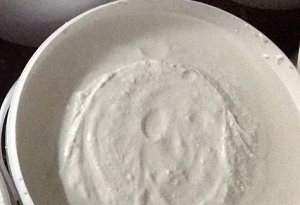
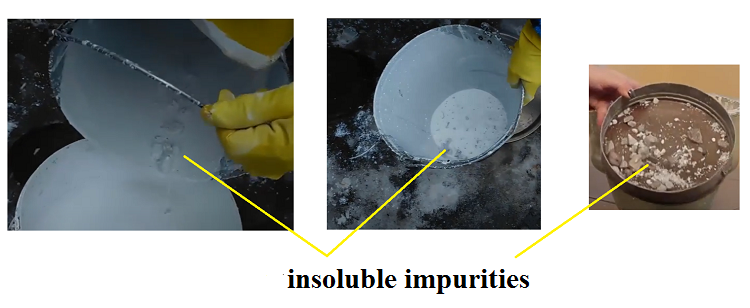
Use high-quality Quicklime (CaO) or Slaked Lime (Ca(OH)2). In some regions, this is called "fat lime" (pure lime), meaning it dissolves completely without leaving insoluble pebbles.
⚠️Avoid:
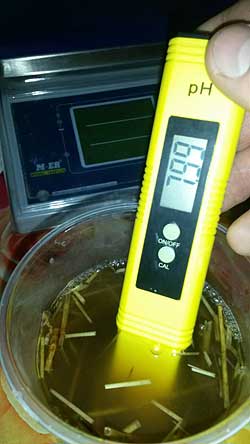 The best tool for this is an electronic pH meter (photo).
Litmus paper is too imprecise for professional results.
1. Take a glass jar, pour 250 ml (approx. 1 cup) of distilled water into it, and mark the level.
2. Weigh out 25 grams (about 1 heaping tablespoon) of your substrate.
✅ Tip: Cut straw into small 1–2 cm pieces first.
3. Add the substrate to the jar, stir well, and let it sit for 30–40 minutes.
4. Measure the liquid with your pH meter.
✅If you use litmus strips:
Ensure they are fresh and not past their expiration date. Before inoculation, simply press the strip firmly against the damp substrate and check the color scale immediately.
While not as precise as a digital meter, this will at least tell you if your environment is alkaline enough.
Whether you use hot water treatment, steam in a tunnel, or a steam chamber, your substrate must still reach a target pH of 7.8–8.2.
To achieve this, you should add lime to the water during the initial soaking or hydration of the raw material.
💡To ensure consistency, you must measure the pH twice:
Before loading: Measure the pH of the raw material after it has been mixed with the lime solution, before it enters the tunnel or tank.
During inoculation: Take samples from 3–4 different spots (especially in a tunnel) to ensure the pH is uniform throughout the entire batch.
Emoji guide: 📌 link | ✅ advice | ▶️ fact | 💡 important | ⚠️ warning