


There are many ways to prepare raw materials for mushroom cultivation. In this article, we will examine the pros and cons of two widely used methods: Bulk Pasteurization and Sterilization.
Bulk pasteurization in a dedicated tunnel is arguably the most stable and scalable method for oyster mushroom production. If the technological manual is followed, this process is highly predictable.
▶️Process Stability: It is a reliable method. If you notice mold or bacterial dark spots during incubation, the cause is usually easy to find and eliminate.
▶️Formula Flexibility: You can experiment with different raw materials and mixes to achieve the perfect balance of nutritional value and the specific structure needed for rapid mycelium growth.
▶️High Efficiency: A single tunnel loading allows for the processing of a large volume of substrate, which is essential for commercial consistency.
📌Pasteurization tunnel for oyster mushroom substrate
Sterilization is performed either in an autoclave (under pressure) or in a steam chamber (at atmospheric pressure).
The main advantage of sterilization is the creation of a "biological vacuum." By killing both harmful and beneficial microorganisms, you ensure that all available nutrients are reserved exclusively for the oyster mushroom mycelium.
▶️Enhanced Nutrition: Sterile substrates can be prepared with a higher nitrogen content than pasteurized ones. High-protein supplements—such as granulated alfalfa hay, cotton husks, or soy hulls—are commonly used.
▶️The Role of Sawdust: Sterilization allows for the use of various fractions of wood sawdust, with the exception of the finest dust (the kind that resembles sand). Sawdust helps maintain the substrate's structure, prevents clumping, and supports proper gas exchange.
⚠️The Downside: Vulnerability.
Sterilized substrate is a "double-edged sword." If even a single spore of Trichoderma (green mold) enters the bag after processing, it will colonize the entire block.
💡This method demands a high-tech cleanroom (inoculation zone) equipped with HEPA filters, laminar flow hoods, and strict sanitization protocols to prevent contamination.
It is important to note a significant difference in how sawdust is used.
While it is a staple for sterile blocks, sawdust is rarely added to pasteurized substrates for two reasons:
1. Low Nitrogen: Sawdust has a very low nitrogen content compared to straw or hay, which are the primary components of pasteurized mixes.
2. Structural Risks: In a tunnel (bulk processing), the role of the "structural element" is played by straw. If you use fine-fraction sawdust in a pasteurizer, it tends to absorb too much water and clump into large, anaerobic lumps. These oxygen-deprived spots will inevitably lead to the formation of mold.
Many growers choose atmospheric sterilization (often called the "Steam Box" method) because it requires much less engineering than a professional tunnel.
 Unlike a tunnel, a steaming chamber does not have a complex ventilation system with fans. Instead, steam from a generator simply enters a small room or a specially welded metal container. Inside, the substrate is packed into small heat-resistant bags (weighing 1.5–4 kg / 3.3–8.8 lbs) and placed on racks.
The temperature is typically held at 98–99°C (208–210°F) for about 12 hours.
The preliminary preparation is often very similar to the tunnel method. Growers soak the raw materials on a concrete pad, stack them into piles for spontaneous heating, and perform several "turns" (moving the pile from place to place) before finally loading the bags into the chamber.
Because you don't need to build a false floor or install high-pressure fans and filters inside the chamber itself, this method feels much more accessible to start with.
However, this "simplicity" comes with hidden costs and risks:
Uneven Heating: In a passive chamber without active air circulation, the surface of the bags can overheat, while the core of the substrate may stay below 99°C (210°F). This allows resilient contaminant spores to survive right in the middle of your block.
The Cooling Trap: In a tunnel, fans provide rapid, sterile cooling. In a steam box, blocks must cool down naturally.
This slow cooling creates a long "temperature window" where the substrate is highly vulnerable to infection before you even get a chance to inoculate it.
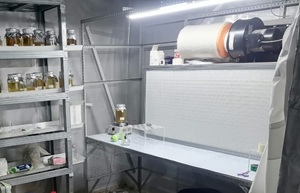
Cleanroom Requirements:
Since you are working with a nearly sterile (but unprotected) substrate, you cannot inoculate it in a regular room.
You must invest in a sterile inoculation zone with a laminar flow hood and air disinfection systems, which often offsets the money saved on the steaming chamber.
ltimately, there is no single "perfect" method—only the one that fits your specific business model.
✅ Choosing between pasteurization and sterilization requires a careful balance of several factors:
If you have easy access to straw and hay, the tunnel is your best bet. If you are based in a region with plenty of hardwood sawdust, sterilization might be more logical.
This is the deciding factor. The larger the production, the more profitable the tunnel becomes. It allows you to process tons of substrate with consistent quality.
A tunnel requires a higher upfront investment. You will need specialized machinery like a substrate press and conveyors for efficient loading and unloading. In contrast, a "steam box" or autoclave is cheaper to build initially but often more expensive to operate due to labor-intensive bag handling.
Handling thousands of small bags for a steam chamber requires a lot of hands. A tunnel, while needing more mechanical equipment, significantly reduces the manual labor required per ton of finished product.
Emoji guide: 📌 link | ✅ advice | ▶️ fact | 💡 important | ⚠️ warning